Trade guide

The Best Work Boots for Roofing

Roof work puts traction and flexibility ahead of deep ground lugs. The current sourced catalog has two wedge options. Neither product record promises grip on shingles or replaces fall protection.

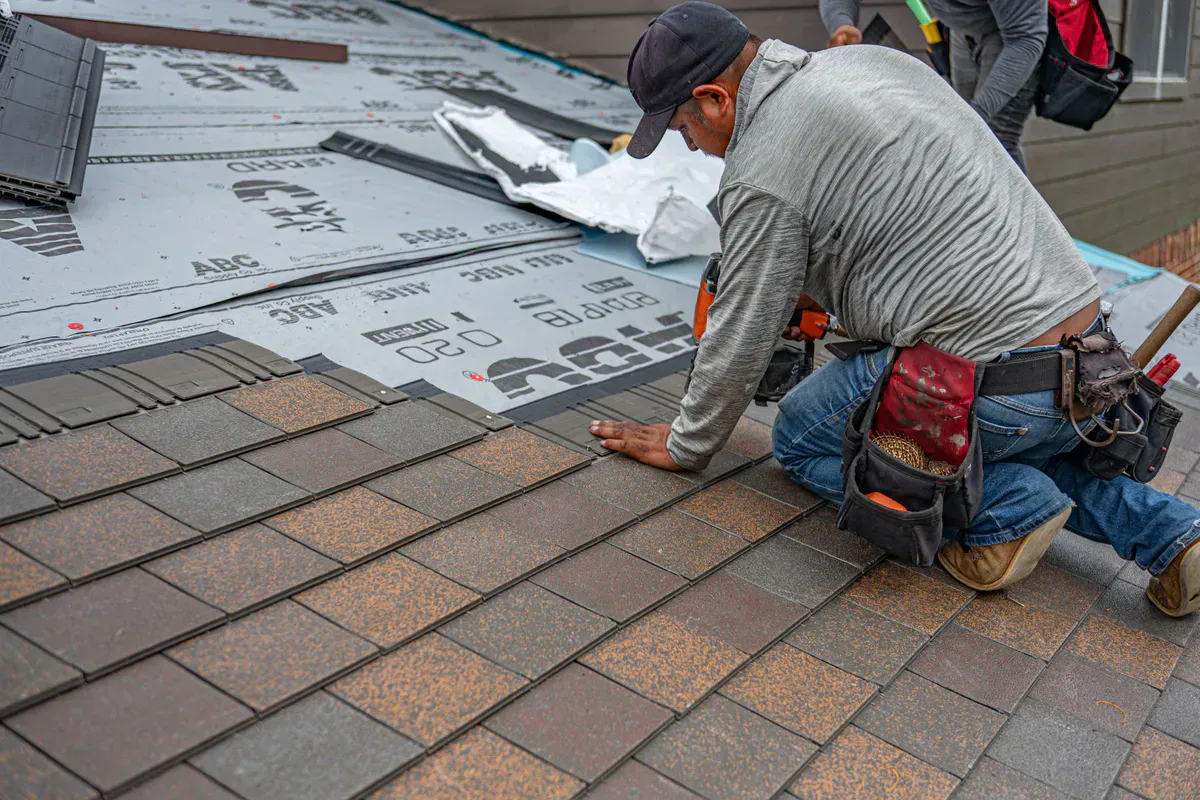
Roofer kneeling on a pitched roof nailing architectural asphalt shingles over underlayment

Disclosure: As an Amazon Associate I earn from qualifying purchases. Amazon links on this page may earn the site a commission. How this works.

What the source can and cannot tell you

A wedge outsole places broad rubber contact underfoot. That geometry is an editorial reason to compare wedge boots for roof work. It is not a manufacturer promise of shingle traction. Surface condition, roof pitch, fall protection, and employer rules control.

No budget product in the current source registry has a roof-specific traction claim. The dry-duty Tank is therefore not a recommendation on this page.

Sourced wedge options

Our pick

Thorogood American Heritage 6" Moc Toe

A MAXWear Wedge slip-resistant outsole with a composite shank and Goodyear storm welt construction.

View on Amazon
Welted alternate

Carhartt 6" Moc Toe Wedge

A dual-density rubber outsole and Goodyear welt construction in a soft-toe boot.

View on Amazon
Our pick

Thorogood American Heritage 6" Moc Toe

Documented specification: Style 814-4200 has a MAXWear Wedge slip-resistant outsole, composite shank, full-grain American leather, removable footbed, Poron cushion insole, and Goodyear storm welt construction. It is a non-safety moc toe, is not waterproof, and is marked EH.

Editorial inference: The slip-resistant wedge gives this option the strongest documented outsole case in the current catalog. Thorogood does not state that it is a roofing boot or guarantee traction on shingles.

Pros
  • Slip-resistant wedge outsole
  • Composite shank and Goodyear storm welt
Cons
  • Non-safety toe
  • Not waterproof and not roof-specific
View on Amazon
Welted alternate

Carhartt 6" Moc Toe Wedge

Documented specification: This soft-toe boot combines oil-tanned leather and abrasion-resistant fabric with a FastDry lining, polyurethane insole, Insite footbed, dual-density rubber outsole, and Goodyear welt construction. Carhartt states ASTM F2892-18 EH.

Editorial inference: The wedge shape and welt construction make it a comparison option. The source record does not state slip resistance, waterproofing, or roof-specific traction.

Pros
  • Dual-density rubber outsole
  • Goodyear welt construction
Cons
  • No slip-resistance claim in the source record
  • Soft toe and no waterproof claim
View on Amazon

Specifications above come from first-party records checked July 15, 2026. Read how the source and inference layers work, the slip-resistant guide, and break-in guidance.

Common questions

What kind of boots do roofers wear?

The roofing contractor's procedure, surface condition, pitch, and fall-protection plan control. Compare the exact boot's documented outsole and construction, but do not turn a wedge shape or slip-resistant label into a promise of shingle traction.

Are heavy work boots good for roofing?

Weight alone does not decide roofing suitability. The required protection, secure fit, roof system, surface condition, and employer procedure matter together. Evaluate the exact boot and do not rely on broad claims about lug, wedge, or flexible soles.