Trade guide

The Best Work Boots for Ironworkers

Standing on rebar concentrates your whole weight on a line under your arch. Without a stiff shank, your feet do the structural work, and they will tell you about it by lunch. Shank, height, and a rated toe come first in this trade. Everything else is preference.

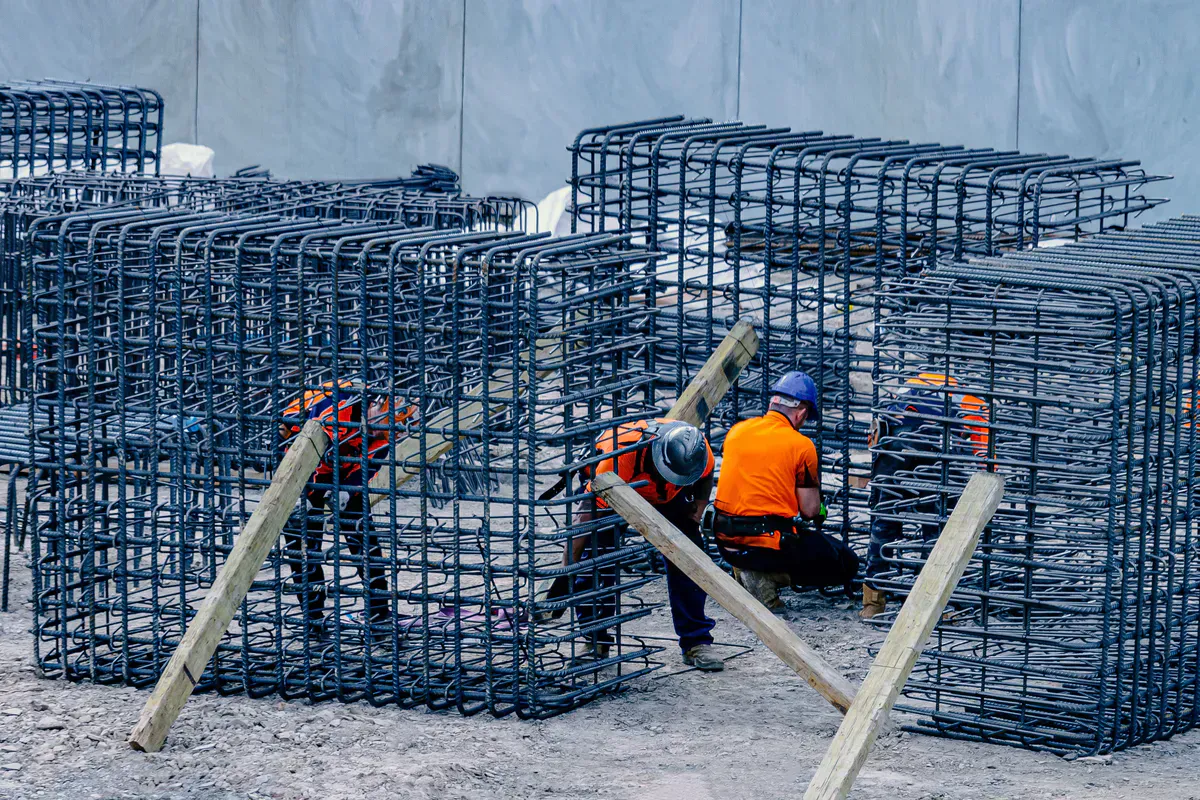
Crew of ironworkers tying rebar cages for concrete footings at a construction site

Disclosure: The Boot Index is reader supported. As an Amazon Associate we earn from qualifying purchases made through links on this page, at no extra cost to you. How this works.

What the trade demands

The jobThe spec
Walking and standing on barA stiff shank that bridges your arch across the bar
Dropped steel and toolsRated safety toe; steel remains the trade default. See composite vs steel
Ankle loads on uneven cagesBoot height, 8 inch preferred by many connectors and rodbusters
Overhead and rolling stockMetatarsal guard where your contract requires it

On met guards, the straight answer: none of the boots in our verified pool carries one. Dedicated metatarsal models exist and many structural contracts require them. Treat the picks below as the base-boot layer for bar work, and follow your steward and your contract on met requirements. We do not stretch a spec sheet to say otherwise.

Top picks at a glance

Budget pick

EVERBOOTS Tank S

Steel toe to ASTM F2413 with a steel shank in the sole, the spec that matters when you stand on bar. Priced like a first-year boot.

Check Price on Amazon
Our pick

Timberland PRO Pit Boss

Steel toe, EH protection, and an outsole built for slip, oil, and abrasion resistance. The trade workhorse of this pool.

Check Price on Amazon
Premium pick

Thorogood Heritage 8"

USA-made 8 inch boot with a fiberglass shank and calf-high support. The height and stiffness the trade asks for.

Check Price on Amazon
Budget pick

EVERBOOTS Tank S

The Tank S earns its slot on two stated specs that matter here: a steel toe cap meeting ASTM F2413-11 impact and compression standards, and a steel shank the maker credits with reducing pressure on the foot, including on stairs and ladders. That shank is exactly the part doing the work when you stand on bar. A thick outsole is pitched at puncture protection from sharp objects underfoot, and a back loop makes the on-off easier.

The owner record is mixed on hardware: laces breaking inside two months is a recurring complaint, one owner reported a sole leak by month three, and traction reports on smooth concrete are split. At this price it is a credible first-year or backup boot, not a career boot.

ToeSteel, ASTM F2413-11
ShankSteel
UpperLeather
SoleRubber, thick build pitched at puncture protection
Pros
  • Steel toe and steel shank at a budget price
  • Back loop for easy on and off
  • Removable insoles
Cons
  • Laces break early, per many owners
  • One owner reported a sole leak by month three
  • Mixed traction reports on smooth concrete
Check Price on Amazon
Our pick

Timberland PRO Pit Boss 6"

The Pit Boss is the trade workhorse in this pool. The steel toe meets ASTM F2412-18a and F2413-18 impact and compression standards, EH protection is rated to ASTM F2892-18 for secondary protection against live circuits, and the rubber outsole is built for slip, oil, and abrasion resistance, heat-resistant compound included. Timberland PRO's 24/7 comfort system is the maker's answer to foot fatigue, with arch support called out specifically.

The catch with this boot is sizing. Owner reports are genuinely all over the map. Some sized down a full size, others recommend a half size up, and some found it wide for a standard width. Plan to try it against your usual size and adjust. Once dialed, it covers structural site conditions as completely as anything here.

ToeSteel, ASTM F2412-18a / F2413-18 I and C
ElectricalEH rated, ASTM F2892-18
OutsoleRubber, slip, oil, abrasion and heat resistant
Comfort24/7 comfort suspension system
Pros
  • Full safety stack: steel toe plus EH rating
  • Outsole rated for slip, oil, abrasion, heat
  • Long-running trade favorite, top-ten seller in its category
Cons
  • Sizing is inconsistent across owners; expect to exchange once
  • Some owners report the fit hurts until sorted
Check Price on Amazon
Premium pick

Thorogood American Heritage 8" Moc Toe

The 8 inch Heritage brings the height this trade prefers, with a calf-high shaft and the maker's flexible 8-inch ankle support called out by name. The shank is fiberglass, built to keep the boot's shape under heavy duress, and the MAXWear wedge outsole carries a real slip-resistance rating, ASTM F3445-21, on wet and oily surfaces. EH resistance to ASTM F2892-18 and USA construction round it out. It is a soft toe boot, so where your contract requires a rated toe, this is the off-shift and inspection-day pair rather than the connecting pair.

Owner cautions: sizing reports are mixed with some finding it large, an older review calls the width a little narrow, and durability opinions span from boots that last twice as long to early damage. The welt construction means it resoles, which is where the premium price pays back. The math is in our lifespan guide.

Height8 inch, calf-high shaft
ShankFiberglass
OutsoleMAXWear wedge, ASTM F3445-21 slip rated
SafetyEH rated F2892-18; soft toe
Pros
  • Height and shank stiffness for bar work
  • Rated slip resistance
  • USA made, resoleable welt build
Cons
  • Soft toe; not the pair for rated-toe requirements
  • Sizing and width reports are mixed
  • Heavy, at a listed five pounds
Check Price on Amazon

How these picks get made, and what we will not claim: how we pick boots.

Common questions

What boots do ironworkers wear?

Stiff-shanked leather boots that can stand on a beam edge or rebar all day without folding. Height for ankle support, a rated toe, and often a metatarsal guard. The shank stiffness is the spec that separates ironworker boots from general construction boots.

Are work boots good for standing all day on steel?

Standing on bar and beam concentrates your whole weight on a narrow line of sole. A boot with a proper shank spreads that load across the arch. Without it, your arches do the work, and they let you know by lunch.

Do ironworkers need metatarsal guards?

Many structural and rebar jobs require them, and dropped steel makes the case on its own. Modern internal met guards add protection without much bulk. Check your contract rules before buying without one.