Trade guide

Work Boots for Farm and Ranch Work: Match the Boot to the Chore

Dry fence work, rain-soaked pasture, manure cleanup, pesticide handling, and livestock impact are different footwear problems. The leather options here cover only dry chores or ordinary weather exposure.

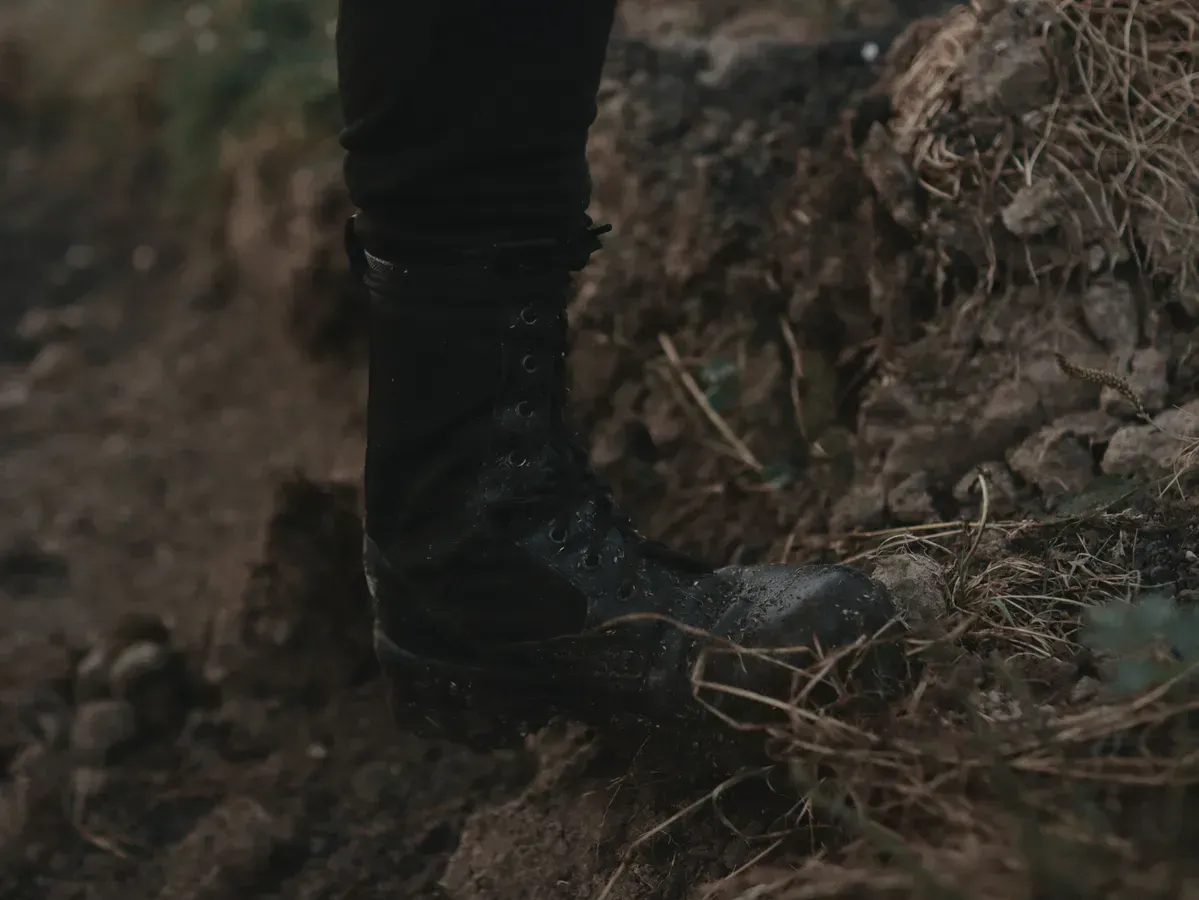
Tall lace-up work boot stepping through churned mud and matted grass on a farm path

Disclosure: As an Amazon Associate I earn from qualifying purchases. Amazon links on this page may earn the site a commission. How this works.

The first decision

No single leather work boot covers every farm exposure. The sourced Amazon options below are soft-toe boots for dry chores or ordinary wet weather. They are not picks for pesticide handling, manure or wastewater contact, farm biosecurity procedures, or impact hazards that require a safety toe.

Match the footwear to the exposure

Work conditionWhat to verify
Dry fence, hay, and equipment choresRequired toe marking, documented construction, ground conditions, and fit
Rain, dew, and wet grassNamed waterproofing and outsole language; waterproof does not mean chemical resistant
Manure, livestock wastewater, or a biosecurity procedureThe farm's task-specific PPE, cleaning, and decontamination requirements; no affiliate pick below
Pesticide handling or restricted-entry workThe pesticide label and Worker Protection Standard footwear requirement; no affiliate pick below
Hooves, gates, drawbars, or dropped materialThe employer-required protective-footwear marking; every current pick below is soft toe

The employer's hazard assessment, farm biosecurity plan, and pesticide label control. Confirm every required marking on the exact size and variant. None of the options below promises protection beyond the manufacturer's current record.

When the leather picks do not apply

CDC's livestock wastewater guidance treats animal waste as a biological and chemical exposure that needs task-specific controls and PPE. In CDC's 2024 Colorado dairy report, the recommended ensemble for contact with affected cows, raw milk, or contaminated items included boots or boot covers. Workers cleaning manure and milking cows frequently reported rubber boots or boot covers. That outbreak guidance does not make any rubber boot an all-purpose farm boot, but it does show why a leather membrane is not a substitute for a farm biosecurity procedure.

EPA's Worker Protection Standard makes pesticide-label PPE decisive for covered tasks. For specified early-entry work, EPA requires label-conforming or chemical-resistant footwear. EPA's interpretive guidance states that leather uppers are not chemical resistant. None of this page's affiliate options is a pesticide-footwear recommendation.

Sourced leather options for dry or weather-wet chores

These exact products have dated manufacturer records. All three are soft toe. None is documented as liquid-proof or chemical resistant, and none overrides a farm's PPE rule.

Dry chore only

EVER BOOTS Tank

A 6-inch soft-toe boot shown in regular and wide options. The maker positions it for dry cement and gravel.

View on Amazon
Weather-wet soft toe

Carhartt Ironwood 6" WP

Storm Defender waterproofing with a polyurethane midsole, an Insite footbed, and a slip-resistance marking.

View on Amazon
Weather-wet alternate

Carhartt Rugged Flex 6" WP

Waterproof breathable protection with a lug outsole that Carhartt describes as oil and slip resistant.

View on Amazon
Dry chore only

EVER BOOTS Tank

Documented specification: The Tank is a 6-inch soft-toe work boot shown in regular and wide options. EVER BOOTS positions it for construction and everyday wear on dry cement and gravel.

Editorial inference: That dry-surface positioning makes it a basic option for dry fence lines and equipment days when no safety toe is required. The source record does not support mud, wash-down, manure, wastewater, or pesticide use.

Pros
  • Regular and wide options are shown
  • Dry cement and gravel are named by the maker
Cons
  • No waterproof claim in the source record
  • Soft toe, so it does not satisfy a safety-toe rule
View on Amazon
Weather-wet soft toe

Carhartt Ironwood 6" Waterproof

Documented specification: The Ironwood uses brown oil-tanned leather, cement construction, a Storm Defender membrane, a polyurethane midsole, and an Insite footbed. It is a soft-toe boot. Carhartt states ASTM F2892-18 EH and ASTM F3445-21 SR.

Editorial inference: The waterproof layer and stated slip-resistance marking make it the most documented option in this set for rain, dew, and damp outdoor ground when a safety toe is not required. Waterproofing does not establish chemical resistance or liquid-proof biosecurity footwear.

Pros
  • Named waterproof membrane
  • Manufacturer-stated EH and slip-resistance markings
Cons
  • Soft toe
  • No chemical-resistant or liquid-proof claim
View on Amazon
Weather-wet alternate

Carhartt Rugged Flex 6" Waterproof

Documented specification: This soft-toe boot combines leather and abrasion-resistant fabric with Storm Defender waterproof breathable protection and a FastDry lining. It has an EVA midsole, polyurethane insole, fiberglass shank, and a rubber lug outsole described as oil and slip resistant. Carhartt states ASTM F2892-24 EH and ASTM F3445-24 SR.

Editorial inference: The membrane and lug outsole make it a documented alternate for rain, dew, and damp outdoor ground. The soft toe and lack of a chemical-resistant or liquid-proof claim remain firm limits.

Pros
  • Waterproof breathable protection
  • Documented fiberglass shank and lug outsole
Cons
  • Soft toe
  • No chemical-resistant or liquid-proof claim
View on Amazon

Common questions

What are the best boots for farm work?

There is no single best boot for every farm exposure. Dry chores and ordinary wet weather can suit a sourced leather work boot. Manure or wastewater contact, farm biosecurity procedures, pesticide work, and impact hazards can require different footwear. Follow the farm plan, pesticide label, and employer-required safety marking.

Should farm boots be steel toe?

The hazard assessment and workplace rule decide whether a protective toe is required and which marking is acceptable. Every affiliate option in this guide is soft toe, so none satisfies a safety-toe requirement. Confirm the exact finished boot instead of choosing from toe material alone.