Trade guide

The Best Work Boots for Mechanics

A service bay puts hard concrete, fluid spills, and dropped parts in the same workspace. Start with the shop's toe rule. Then compare documented outsole and underfoot construction.

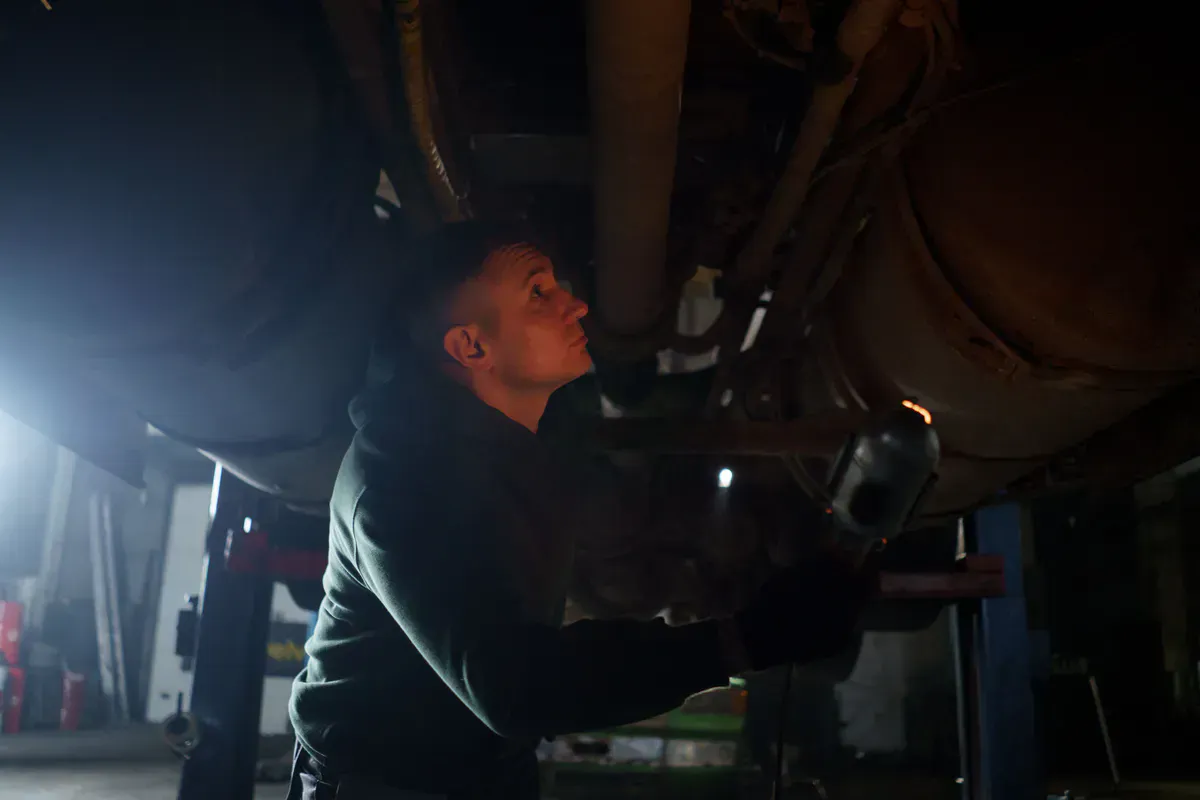
Mechanic with a work light inspecting the underside of a truck on a lift in a dim garage

Disclosure: As an Amazon Associate I earn from qualifying purchases. Amazon links on this page may earn the site a commission. How this works.

Shop-floor priorities

ConditionWhat to verify
Dropped parts and toolsThe safety-toe marking required by the shop
Fluid on concreteManufacturer slip or oil-resistance language
Standing and crouchingDocumented midsole, footbed, and shank construction

No outsole eliminates slip risk. Clean spills, confirm required markings on the exact size and variant, and follow shop PPE rules.

Sourced options at a glance

Dry-floor option

EVER BOOTS Tank

A 6-inch soft-toe boot that the maker positions for everyday wear on dry cement.

View on Amazon
Our pick

Timberland PRO Pit Boss

Steel safety toe, EH protection, and a Timberland PRO rubber slip-resistant outsole.

View on Amazon
Wedge option

Thorogood Heritage 6" Moc Toe

A slip-resistant MAXWear Wedge, removable footbed, and composite shank in a non-safety boot.

View on Amazon
Dry-floor option

EVER BOOTS Tank Soft Toe

Documented specification: The Tank is a 6-inch soft-toe work boot shown in regular and wide options. EVER BOOTS positions it for construction and everyday wear on dry cement and gravel.

Editorial inference: It can fit dry service work when no safety toe is required. The record does not support a slip-resistance, oil-resistance, waterproofing, insole, or arch claim.

Pros
  • Dry cement is named by the maker
  • Regular and wide options shown
Cons
  • No safety toe
  • No shop-fluid outsole claim in the source record
View on Amazon
Our pick

Timberland PRO Pit Boss 6" Steel Toe

Documented specification: The Pit Boss is a 6-inch nubuck-leather boot with a steel safety toe, stated electrical-hazard protection, a padded collar, the 24/7 Comfort System, and a Timberland PRO rubber slip-resistant outsole. Wide sizes are shown.

Editorial inference: It is the most complete service-bay option in this set when a steel safety toe is acceptable. The current record does not support an exact ASTM year or version, an oil-resistance claim, or waterproofing.

Pros
  • Steel safety toe and EH protection
  • Manufacturer-described slip-resistant outsole
Cons
  • No waterproof claim
  • Exact safety-standard version is not in the current record
View on Amazon
Wedge option

Thorogood American Heritage 6" Moc Toe

Documented specification: Style 814-4200 has a MAXWear Wedge slip-resistant outsole, composite shank, removable footbed, Poron cushion insole, full-grain American leather, and Goodyear storm welt construction. It is a non-safety moc toe, is not waterproof, and is marked EH.

Editorial inference: The documented wedge, shank, and removable footbed make it a useful concrete-floor option for shops that allow a non-safety toe.

Pros
  • Slip-resistant wedge and composite shank
  • Removable footbed
Cons
  • Non-safety toe
  • Not waterproof
View on Amazon

Specifications above come from first-party records checked July 15, 2026. Read how the source and inference layers work.

Common questions

What is the best work boot for working on concrete?

For a cured shop floor, start with the shop's toe rule and compare documented midsole, footbed, shank, and outsole construction. No boot removes fatigue or slip risk. Active wet concrete is a different chemical-exposure problem that requires employer-selected protective equipment.

Do mechanics need steel toe boots?

The shop's hazard assessment and footwear rule decide whether a protective toe is required. If more than one toe material is permitted, compare exact finished-boot markings and fit rather than assuming that steel or composite alone determines suitability.