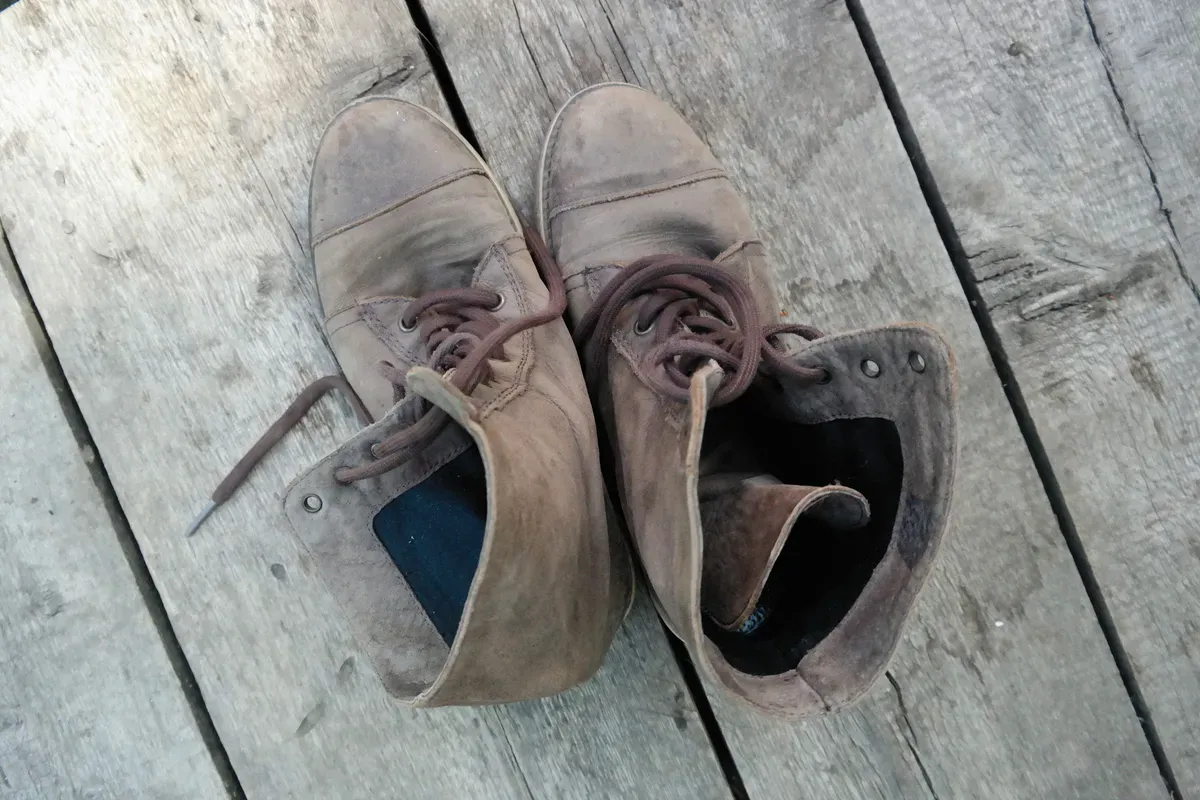
Construction sets the repair options
Cement construction bonds the sole to the upper. A stitched welt gives a repair shop a defined connection point for outsole work. That difference affects repairability, but it does not promise a service life.
A cobbler still has to inspect the upper, insole, welt, and safety components before recommending a repair. A repairable construction is not the same as a repairable pair.
Goodyear welt vs cement construction
A Goodyear welt uses a stitched welt as part of the upper-to-sole connection. Cement construction uses an adhesive bond. The visible edge can offer a clue, but decorative stitching can mislead. Use the manufacturer specification or ask a repair shop before assuming a boot can be resoled.
Care instructions are material-specific
- Heat and soaking. Timberland's current work-boot guide advises against heating or soaking its footwear. Treat that as brand guidance, not a universal material rule.
- Drying. Red Wing's current FAQ says its boots should dry at room temperature and away from a heater. The exact maker's instructions control for another boot.
- Conditioning. Red Wing separates oil-tanned, roughout or nubuck, and smooth-finished care. Do not apply one treatment or interval across unknown materials.
- Inspection. Outsole and upper wear must be judged against the manufacturer guidance and workplace replacement rule, not a generic calendar.
Manufacturer care sources and limits
- Timberland: How to Break In Work Boots, checked July 15, 2026. Used only for Timberland's no-heat and no-soak guidance.
- Red Wing: How to Care for Your Boots, checked July 15, 2026. Used for the material-identification step.
- Red Wing: Boot Care FAQ, checked July 15, 2026. Used only for Red Wing's room-temperature drying guidance.
These sources describe their manufacturers' footwear. They are not a universal care schedule, lifespan promise, or warranty.
Manufacturer record: Thorogood: American Heritage 6-Inch Tobacco Moc Toe MAXWear Wedge Boot, checked 2026-07-15.
When a repair is worth asking about
A repair shop can compare the outsole work with the condition of the upper and welt. Safety footwear needs extra caution because a repair must not obscure or compromise the required marking. Get a professional assessment instead of assuming that stitched construction makes every repair appropriate.
Signs it is time
- Tread worn to the workplace replacement limit or no longer suited to the surface.
- A changed underfoot feel or visible midsole damage.
- Cracks across the flex point that go through the leather, not just the finish.
- Any impact or damage that triggers replacement under the manufacturer's guidance or workplace PPE rule.
Confirm replacement criteria with the employer and the current manufacturer guidance for the exact boot. This page does not promise a lifespan or safety outcome.
Common questions
How long should work boots last?
There is no responsible fixed lifespan. Surface, moisture, maintenance, construction, damage, and workplace replacement rules all matter. Inspect the exact pair and follow the manufacturer and employer guidance instead of using a calendar promise.
What is the difference between Goodyear welt and cement construction?
A Goodyear welt uses a stitched welt in the upper-to-sole connection, while cement construction uses an adhesive bond. That difference affects repair options, but it does not prove that an individual pair can or should be resoled. A repair shop must inspect the complete boot.
How can I tell if my boots are Goodyear welted?
Visible edge stitching can be a clue, but decorative stitching can mislead. Check the current manufacturer specification for the exact style or ask a repair shop. Do not infer repairability from appearance alone.
Is it worth resoling work boots?
A repair shop must compare the outsole work with the condition of the upper, welt, insole, and any safety components. Stitched construction creates repair options but does not guarantee that a repair is appropriate or economical for the exact pair.
When should I replace work boots?
Use the employer's inspection and replacement rule plus the manufacturer guidance for the exact boot. Tread loss, upper damage, changed underfoot structure, or an impact may require assessment. Appearance alone does not establish whether protective footwear remains serviceable.