Trade guide

The Best Work Boots for Landscapers

Landscaping boots live wet. Dew in the morning, irrigation by noon, and mud whenever the job says so. The picks below favor waterproof leather, real traction, and builds that survive being soaked and dried five days a week.

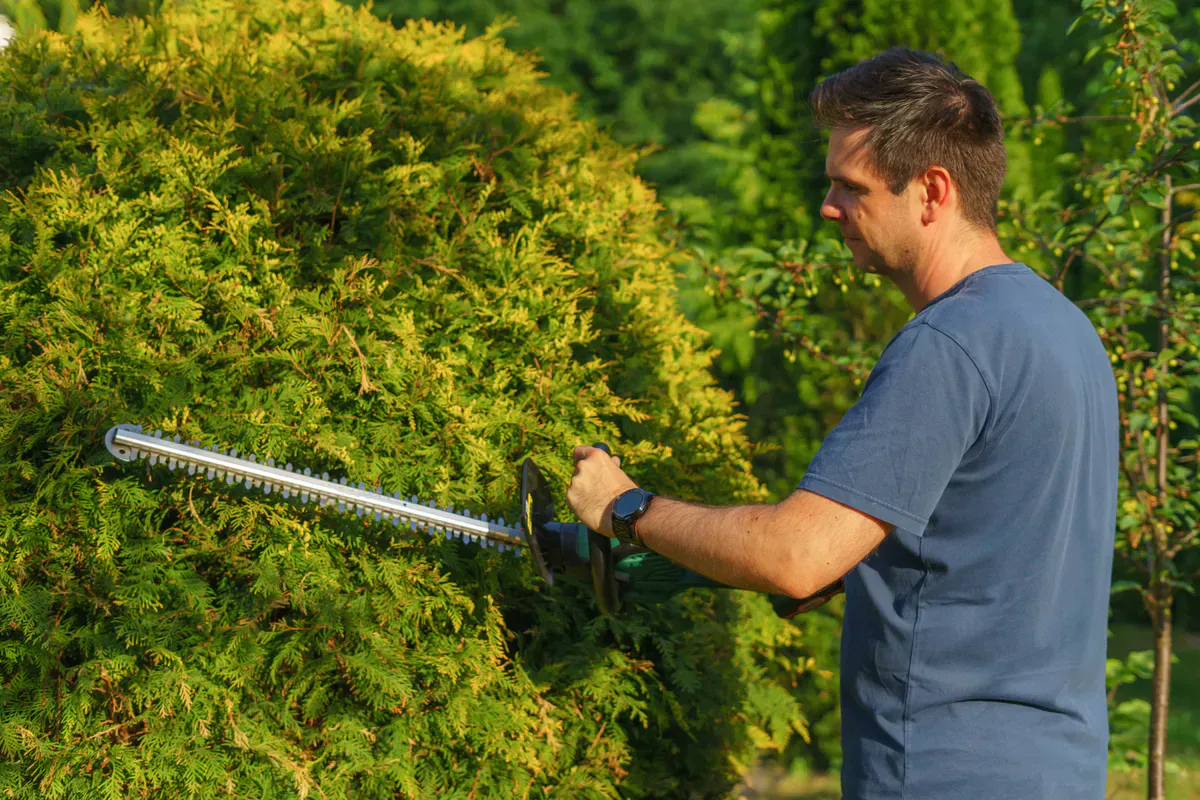
Landscaper shaping an evergreen hedge with a power hedge trimmer on an outdoor job

Disclosure: The Boot Index is reader supported. As an Amazon Associate we earn from qualifying purchases made through links on this page, at no extra cost to you. How this works.

What landscaping does to a boot

Few trades cycle a boot through wet and dry as hard as this one. Water breaks down stitching and rots liners. Slopes and wet turf demand grip that a worn flat sole will not give. And if your crew runs mowers, edgers, or augers, the toe question stops being optional. Here is the short version of what matters:

HazardWhat to look for
Wet grass, irrigation, mudA named waterproof membrane, not just treated leather
Slopes and loose groundLugged or traction-rated outsoles with real edges
Powered equipmentA rated safety toe; see the toe guide
Ten-hour days on your feetCushioned midsoles and removable footbeds

Top picks at a glance

Budget pick

EVER BOOTS Tank

A nubuck leather boot the maker pitches for landscaping and manual labor, with a wide rubber sole and removable insoles. Buy spare laces with it.

Check Price on Amazon
Our pick

Carhartt Rugged Flex 6" WP

Oil-tanned leather with a Storm Defender waterproof membrane that breathes. The right baseline for feet that live in wet grass.

Check Price on Amazon
Premium pick

Thorogood Heritage 6" Moc Toe

USA-made, Goodyear storm welt sealing moisture at the sole joint, and a resoleable build that outlasts cemented boots.

Check Price on Amazon
Budget pick

EVER BOOTS Tank

The Tank is the entry point. EVER BOOTS pitches it directly at construction, contracting, and landscaping work, and the spec sheet backs the basics: nubuck leather upper with reinforced stitching, a padded collar, and a wide rubber sole the maker credits for stability and arch support. The insoles come out if you run your own orthotics.

Know what you are buying. This is a soft toe boot with no waterproof membrane claimed, so it suits dry-season crews and planting work more than irrigation repair. Owners rate it comfortable and a good value.

UpperNubuck leather, reinforced stitches
SoleRubber, wide platform
ToeSoft toe
FootbedRemovable insoles
Pros
  • Priced for a first season
  • Removable insoles take orthotics
  • Owners call them comfortable and well made
Cons
  • Owners report the stock laces wear out fast
  • No waterproofing claimed
  • Weight gets mixed opinions from owners
Check Price on Amazon
Our pick

Carhartt Rugged Flex 6" Waterproof

For a trade that lives in wet grass, the Rugged Flex earns the middle slot on its membrane. Carhartt's Storm Defender waterproofing is built to keep water out while letting the boot breathe, wrapped in oil-tanned leather with a rubber toe and heel bumper for the knocks. An EVA midsole with a polyurethane insole handles the all-day part.

The honest cons, straight from owners: the stock laces are widely disliked for refusing to stay tied, and some owners dispute how waterproof the boots stay over time. Membranes are a lifespan, not a guarantee. Budget for new laces on day one and treat the leather, and this is the boot for wet-morning work.

WaterproofingStorm Defender membrane
UpperOil-tanned leather
ToeSoft toe, ASTM F2892-24
MidsoleEVA with polyurethane insole
Pros
  • Named waterproof membrane that breathes
  • Rubber toe and heel bumper for rough contact
  • Cushioning built for full shifts
Cons
  • Stock laces will not stay tied, per many owners
  • Some owners report water getting through over time
  • One owner found the fit large; try your usual size first
Check Price on Amazon
Premium pick

Thorogood American Heritage 6" Moc Toe

The Thorogood is the buy-once option. Made in the USA from oil-tanned full-grain leather with Goodyear storm welt construction, which seals moisture at the joint between upper and midsole and, more important for the long game, makes the boot resoleable. The MAXWear wedge outsole carries an actual slip-resistance rating, ASTM F3445-21, including on wet and oily surfaces.

Two cautions from owners: the fit runs narrow until the leather breaks in, and some report sole separation at the toe. It is also a wedge sole, which grips pavement and turf well but is not a deep-lug slope boot. If your work is steep banks all day, weigh that. For everything else, this is the pair you resole instead of replace. Our lifespan guide runs the resole math.

ConstructionGoodyear storm welt, USA made
OutsoleMAXWear wedge, ASTM F3445-21 slip rated
SafetyEH rated, ASTM F2892-18; soft toe
FootbedRemovable dual-density shock absorption
Pros
  • Resoleable welt construction
  • Rated slip resistance, not just claimed
  • Storm welt seals the sole seam against moisture
Cons
  • Runs narrow until broken in, per owners
  • Some owners report sole separation at the toe
  • Wedge sole is not a deep-lug slope sole
Check Price on Amazon

How these picks get made, and what we will not claim: how we pick boots.

Common questions

What are the best boots for landscaping?

Waterproof leather, aggressive lug soles for slopes and wet turf, and enough ankle support for uneven ground. Landscaping boots live wet, so drying them right between shifts matters as much as the boot itself.

Do landscapers need steel toe boots?

If you run mowers, augers, or chainsaws, a rated toe is cheap insurance and some employers require it. For pure planting and bed work, plenty of landscapers prefer a lighter soft toe. Match the toe to the equipment you actually run.