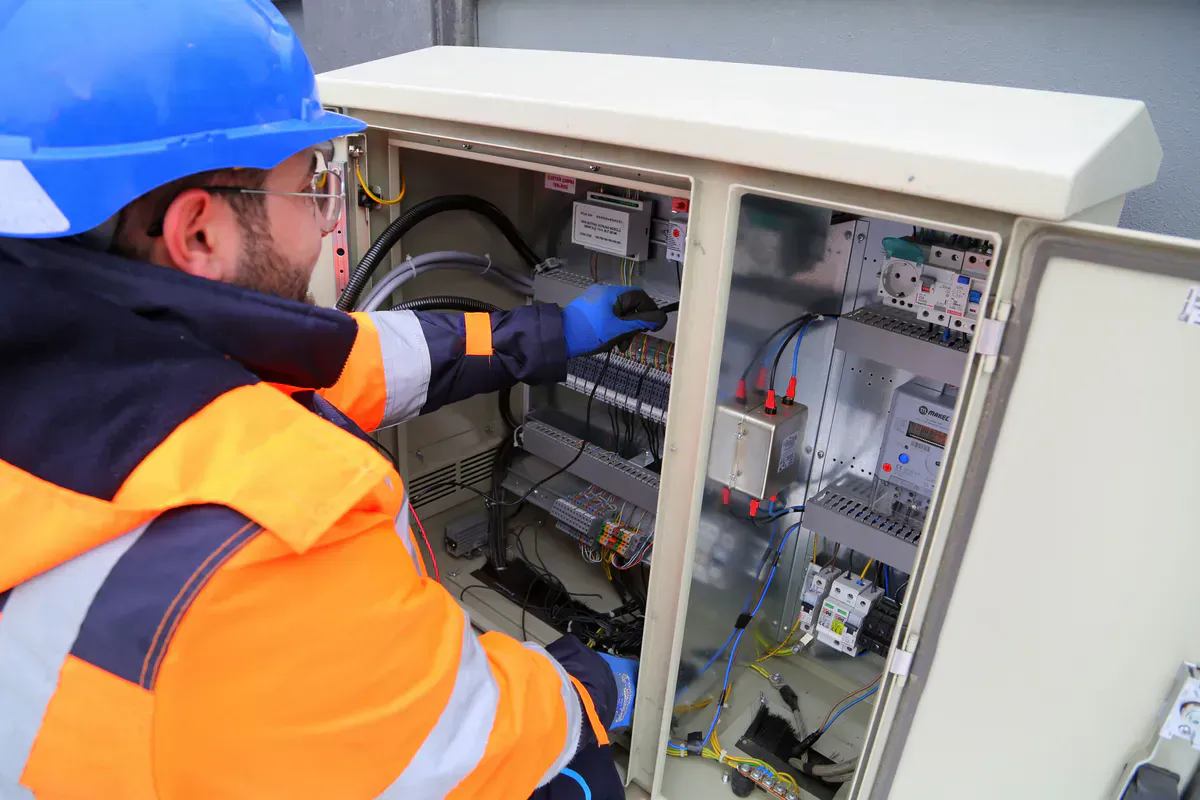
EH stands for Electrical Hazard under ASTM F2413. An EH rated boot gives you a secondary layer of protection against accidental contact with live circuits, built into the boot through non-conductive outsole and heel construction. One catch the listicles skip: the rating is tested under dry conditions. Water, sweat soak, or worn-through tread compromise it.
The fine print most pages skip
The word doing the heavy lifting in the standard is secondary. EH construction is backup for the moment you brush something you did not know was hot. It is not insulation you work on top of, and it never replaces lockout, insulated tools, or procedure. Those do the real protecting. The boot is the last layer, not the first.
The second word is dry. EH performance is verified in dry test conditions, and the protection degrades as the sole system gets wet, whether that water comes from a flooded slab or from your own feet over a twelve hour shift. A worn heel does the same damage to the rating, because the non-conductive layer is the part you grind off. If your sole is going slick, the EH marking on the tag is describing a boot that no longer exists. Our guide to how long work boots last covers the replacement signals.
None of that makes the rating useless. It makes it a system component. Treat it that way and it earns its place on the spec sheet.
Who actually needs EH boots
If your employer requires them, that settles it, and in the electrical trades most do. Beyond the obvious, the rating earns its keep anywhere live circuits and your boots share a floor:
- Electricians and apprentices. Standard equipment for the trade, usually written into the site sheet.
- Utility and line-clearance ground crews. Same logic, rougher ground.
- Mechanics. Shops run on drop cords, lifts, and welders, and hybrid work adds high-voltage systems to the bay.
- Welders. You spend your day holding a live lead. Many fabrication shops spec EH for that reason.
- General construction near temporary power. Generators and strung cable on every floor of the build.
On the toe-cap question, EH pairs naturally with composite, since less conductive material on the foot is easy logic. The cap is not where the rating comes from, though. Sole and heel construction is. Our composite vs steel toe guide breaks down the cap decision on its own merits, and a steel toe boot can carry a legitimate EH rating, as one of the picks below does.
The verified EH picks
House rule: a boot only appears on this page if its own listing states an electrical hazard rating. Several boots we otherwise like did not make that cut. The Carhartt Rugged Flex and Ironwood list a soft-toe ASTM standard without an EH claim, and the budget EVER BOOTS pair states none at all, so the budget lane sits empty here for now. The index grows as we verify more.
Timberland PRO Pit Boss 6" Steel Toe
Steel safety toe and EH protection in one boot, on a slip and oil resistant rubber outsole. The pick when your site sheet requires a rated toe.
Check Price on AmazonCarhartt Ground Force 6" Waterproof
EH rated to ASTM F2892-18 with a waterproof membrane and a slip resistant outsole. The everyday choice for service and utility work where a safety toe is not required.
Check Price on AmazonThorogood American Heritage 6" Moc Toe
American made, EH rated, and built on a Goodyear storm welt you can resole. The buy-once path.
Check Price on AmazonCarhartt Ground Force 6" Waterproof Soft Toe
The Ground Force states its rating plainly: it meets ASTM F2892-18 EH standards for electrical hazard protection, and Carhartt pitches it for exactly the construction and utility environments this page is about. The rest of the build backs the day-to-day reality of that work. A Storm Defender waterproof membrane keeps feet dry in wet jobsite conditions, and the slip resistant rubber outsole is specced for grip on concrete, ladders, and uneven surfaces. Remember the dry-test limit either way. Waterproofing helps you manage wet days, it does not extend the rating into them.
Underfoot you get a lightweight EVA midsole with a shock absorbing insert and Carhartt's ergonomic Insite footbed, which is the comfort package a service electrician on ladders and slab wants. This is a soft toe boot, so if your site requires an impact-rated cap, move to the Pit Boss below.
| Electrical hazard | Meets ASTM F2892-18 EH standards |
|---|---|
| Toe | Soft toe |
| Waterproofing | Storm Defender membrane |
| Outsole | Slip resistant Ground Force rubber |
| Footbed | Insite ergonomic footbed, EVA midsole |
- Stated EH rating, waterproof membrane, and slip resistant outsole in one boot
- Oil tanned leather upper with an abrasion resistant heel
- Moisture wicking liner for long shifts
- Durability feedback is mixed, with some owners reporting stitching coming loose
- Small review pool on the listing, so the record is thinner than the others here
Timberland PRO Pit Boss 6" Steel Toe
The Pit Boss is the answer when the site sheet says safety toe and EH on the same line. Its steel cap meets ASTM F2412-18a and F2413-18 impact and compression standards, and the boot separately states electrical hazard protection, described in Timberland's own words as secondary underfoot protection against live electrical circuits, meeting ASTM F2892-18 among others. That phrasing matches the honest framing of the rating better than most marketing copy does.
The outsole is a heat resistant rubber compound with enhanced slip, oil, and abrasion resistance, which is why this boot also shows up on our slip resistant page. Timberland's 24/7 comfort system supports the arch and cushions the step for long shifts. The one thing to plan around is sizing. Owner feedback is genuinely all over the map, with one buyer sizing down a full size while others recommend a half size up, so order with an easy return path.
| Electrical hazard | Stated EH protection, ASTM F2892-18 |
|---|---|
| Toe | Steel safety toe, ASTM F2412-18a / F2413-18 I and C |
| Outsole | Heat resistant rubber, slip and oil and abrasion resistant |
| Comfort system | Timberland PRO 24/7 arch support and cushioning |
| Materials note | ReBOTL fabric with at least 50% recycled PET |
- Rated safety toe and stated EH protection in the same boot
- Outsole compound built for slip, oil, and heat exposure
- Arch-supporting comfort system for full shifts
- Sizing is inconsistent across buyers, in both directions
- Comfort, fit, durability, and weight all draw mixed feedback
- One owner found the regular width runs a bit wide
Thorogood American Heritage 6" Moc Toe
Thorogood states the EH resistance directly. These MAXWear Wedge boots meet ASTM F2892-18 electrical hazard resistance safety standards, and the rest of the listing reads like a checklist of reasons this boot has the reputation it does. Oil-tanned full-grain leather, American made with USA and globally sourced components, and Goodyear storm welt construction, which means a cobbler can resole it instead of you replacing it. That matters more on an EH boot than most, because a worn-through sole is exactly what kills the rating.
The MAXWear wedge outsole separately meets ASTM F3445-21 slip-resistance standards, and the removable dual-density footbed concentrates shock absorption under the heel and ball. The honest caveats: this is a soft toe, non-safety design, and the fit record says it runs narrow with a tight toe box that needs a week or so to mold. Buyers also report occasional sole separation at the toe.
| Electrical hazard | Meets ASTM F2892-18 EH resistance standards |
|---|---|
| Toe | Soft toe, non-safety moc design |
| Outsole | MAXWear Wedge, ASTM F3445-21 slip resistance |
| Construction | Goodyear storm welt, resoleable |
| Leather | Oil-tanned full-grain |
- Stated EH rating plus a named, tested slip-resistance standard
- Storm welt construction takes a resole, so the boot outlives its first sole
- American made with a removable shock-absorbing footbed
- Runs narrow for many buyers, with a toe box that starts tight
- Some owners report the sole separating at the toe
- No safety toe option in this build
Thorogood American Heritage 8" Moc Toe
Same EH statement, taller boot. The 8 inch American Heritage carries the identical ASTM F2892-18 electrical hazard resistance language and the same MAXWear wedge outsole meeting ASTM F3445-21, with a calf-high shaft for ankle support and a fiberglass shank that holds its shape under load. Made in the USA, with a Poron comfort cushion insole under Thorogood's dual-density footbed.
Pick this over the 6 inch if you want the extra lacing height for uneven ground or ladder work. The trade-off is weight and a longer break-in, and the sizing record is mixed, with some buyers finding them true to size and others saying they run larger than expected.
| Electrical hazard | Meets ASTM F2892-18 EH resistance standards |
|---|---|
| Shaft | Calf-high 8 inch, flexible ankle support |
| Outsole | MAXWear Wedge, ASTM F3445-21 slip resistance |
| Shank | Fiberglass construction |
| Origin | Made in the USA |
- Stated EH rating with the taller shaft electrical ground crews tend to want
- Fiberglass shank keeps its shape under heavy use
- Full-grain saddle leather on a traction wedge outsole
- Sizing feedback is split, with some finding them larger than expected
- An older review notes the fit is a little narrow
- Durability opinions are mixed across the review record
No lab coats here. Picks earn a place by stating the spec on their own listing, and we read the review record for the parts the marketing leaves out. Full method on how we test.
Common questions
What does EH mean on work boots?
EH stands for Electrical Hazard. Under ASTM F2413, an EH rated boot provides a secondary layer of protection against accidental contact with live circuits, with the outsole and heel built from non-conductive materials, tested dry. It is backup protection, not a license to work hot.
Does an EH rating work when boots are wet?
No. EH protection is tested under dry conditions, and water, sweat soak, or worn-through soles compromise it. That limit is printed in the fine print of every standard, and it is the detail most listicles skip. Treat EH as one layer in a system, never the system.
Do electricians need EH rated boots?
Most electrical employers require them, and they are standard equipment for the trade. Just remember what the rating is: secondary protection against accidental contact. Lockout, insulated tools, and procedure do the real protecting.